Use cases

Use RenderLog where a page needs proof

Render files for products and scripts, monitor pages tied to revenue or support and keep the approved state close to every later run.

Lowest entry price
Pay for successful results and expand only when needed.
Broad product coverage
API runs, website checks, schedules and baselines.
History with context
Files, labels, logs and baseline decisions stay together.
Real page controls
Headers, cookies, waits, selectors and flow steps.

Where it fits

High-value pages first

Start with the pages where a missed visual change costs trust, revenue or support time.

Releases

Review visible changes after release

Run a Check Suite after deployment and review only pages that changed, failed or need a new baseline.

Best moment

Pricing, signup, checkout, account or dashboard pages changed.

Product coverage
Check Suites, viewports, waits, flow steps, baselines, labels, webhooks and run history.
Marketing

Keep marketing pages from drifting

Catch broken CTAs, shifted sections, missing blocks and pricing edits while the campaign is still fresh.

Best moment

CMS edits, campaign launches or localized page updates go live.

Product coverage
Landing pages, pricing pages, forms, localized versions, campaign pages and conversion paths.

Agencies

Give clients evidence instead of opinions

Keep a visual record for each client site, then show exactly what changed after updates or weekly work.

Best moment

A client asks what changed or why a page looks different.

Product coverage
Products, Check Suites, labels, result files, history and shareable evidence per client site.

Content

Protect pages functional tests miss

Watch docs, help centers and long content pages where layout breaks rarely fail a normal test suite.

Best moment

CMS edits, translations or templates touch customer-facing content.

Product coverage
Checks for docs, help centers, localized pages, long articles and template-heavy content.

API output

Generate page files inside your product

Create screenshots, PDFs, HTML, Markdown or stored files without operating your own browser fleet.

Best moment

A product, server job or support flow needs a browser-rendered result.

Product coverage
Screenshots, PDF, HTML, Markdown, async jobs, callbacks, storage and run metadata.

Docs

Check documentation after each release

Catch broken examples, missing sections and navigation shifts before users open a support thread.

Best moment

Generated API reference, guides, examples or changelog pages change.

Product coverage
API documentation, changelog pages, guides, examples and generated reference pages.

Product flow

One workspace, three ways to start

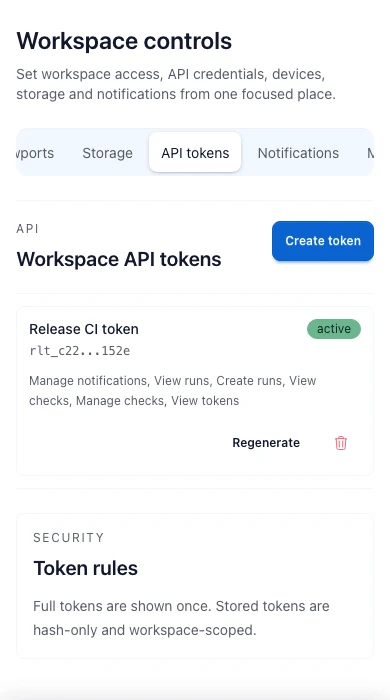
Start from an API call, a recurring website check or a manual review. RenderLog keeps files, setup, baselines and alerts on the same page record.

  1. 1

    API

    Create the result

    Call RenderLog when your product needs screenshot, PDF, HTML, Markdown or file output.

  2. 2

    Checks

    Watch the page

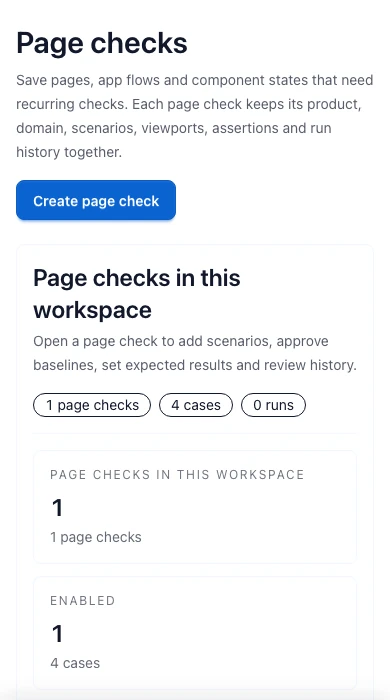
    Save priority URLs with viewports, waits, flow steps, schedules and baselines.

  3. 3

    Review

    Decide what changed

    Keep labels, files, diffs and notifications beside the run so the team can act.

Put the next important page under control

Choose one URL tied to revenue, trust or support. Capture the current state, approve it and let later runs show what changed.

Start using RenderLog