Review visual diffs without screenshot noise
Use baselines, visual diffs, run logs, and alerts to separate expected website changes from real regressions.
On this page
Use this when
- Approve the page after a deliberate release or design change.
- Use the same baseline for recurring checks on the same surface.
- Replace the baseline only when the team accepts the new state on purpose.
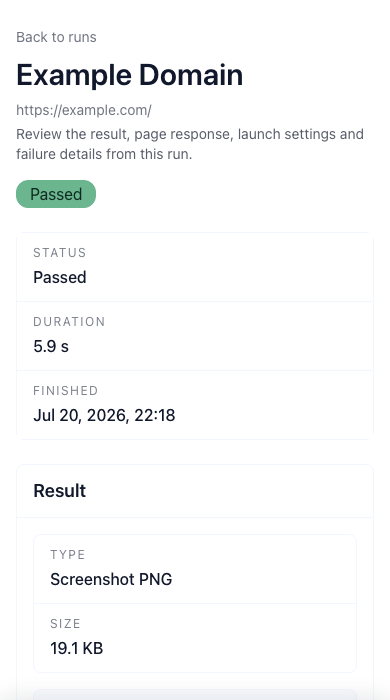
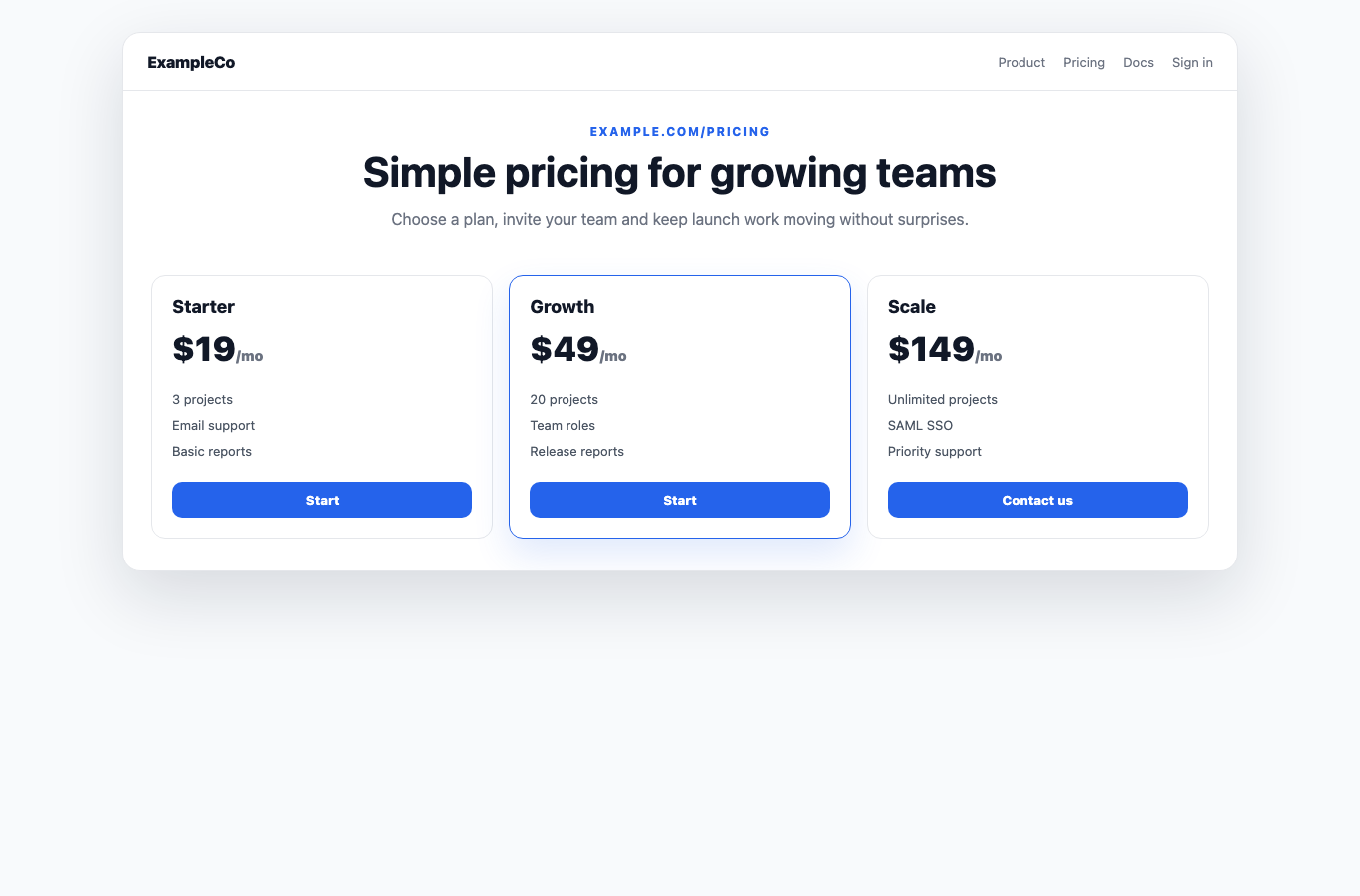
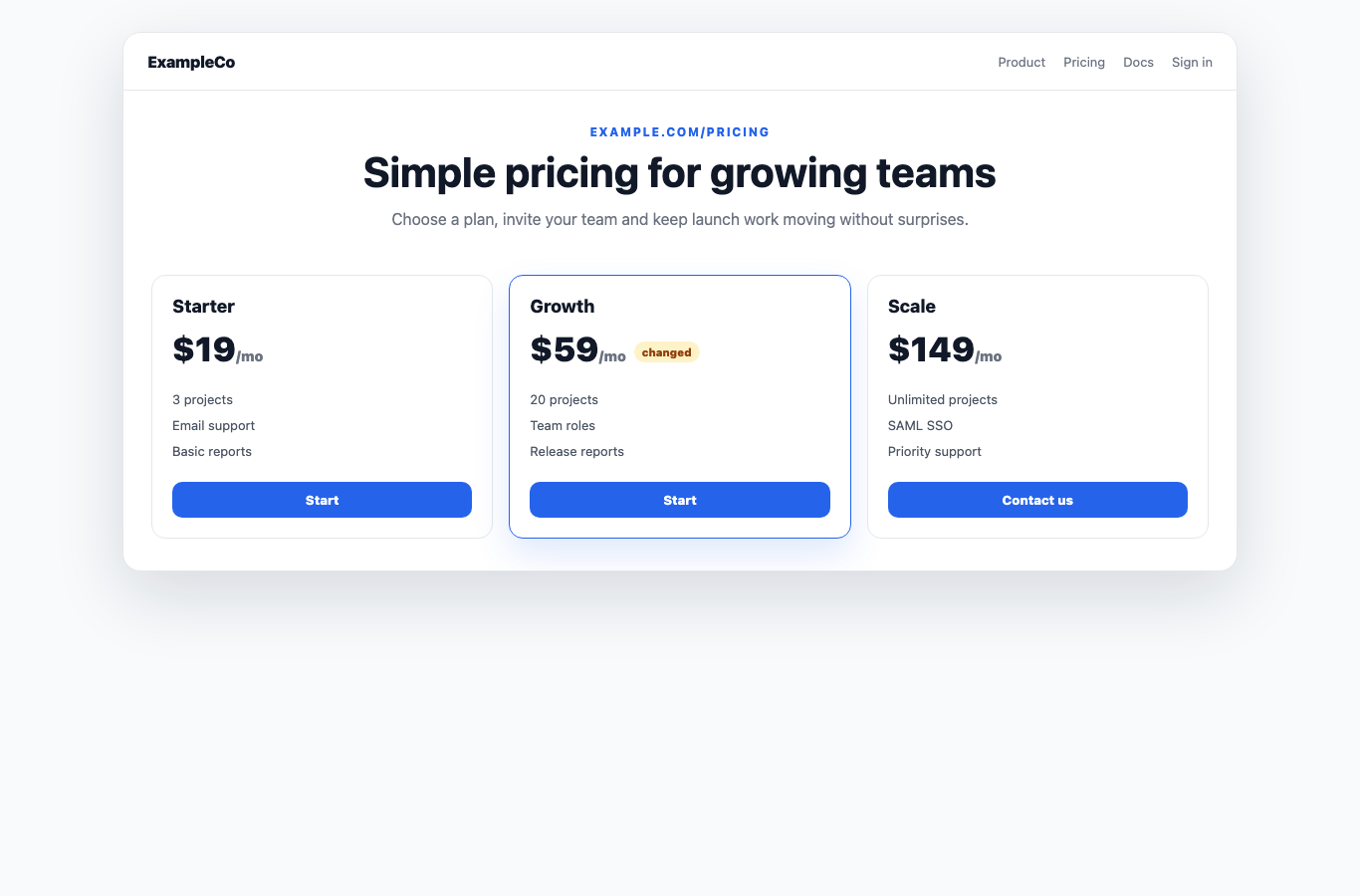
Start with a baseline, not with screenshot churn
A visual diff is only useful when the team knows which state is approved. Without that reference, every new run becomes another screenshot to argue about instead of a decision about whether the page is still acceptable.
That is why baseline review comes first. Approve one clean run, then compare the next runs against that state so the discussion starts from a shared reference instead of from raw image output.
Logs should explain why the run looks wrong
A reviewer should not have to guess whether a failed diff came from the page, the setup, or the environment. Useful logs show the run path, waits, steps, selectors, and visible failures that led to the result.
That context matters even more when the page fails before the final state: login wall, challenge page, missing selector, timeout, or a broken flow step. The visual result alone is often not enough.
- Show the final screenshot next to the step and selector context.
- Keep blocked or wrong-state runs distinct from normal visual changes.
- Make it obvious when the browser never reached the expected page state.
- Use logs to reduce re-runs that only reproduce the same problem.
Alerts should follow ownership, not just failure
An alert is useful only when someone knows the page and can decide what to do next. If the page has no owner, more alerts will not create responsibility - they will only create noise.
Tie alerts to checks that matter now, such as pricing, checkout, launch pages, or client-facing surfaces. Leave lower-risk pages on digest review until the team proves they need interruption-level visibility.
- Immediate alert for critical baseline mismatches or blocked runs.
- Digest review for routine pages with stable history.
- No alert for experiments or pages with intentionally changing content.
- Review ownership before expanding the alert set.
Related links
Guide questions
What makes a visual diff useful?
Why do logs matter for visual review?
Ready to apply this on a real page?
Turn the next important page into a saved result, a reviewed baseline or a recurring check instead of leaving it as a one-off issue.